
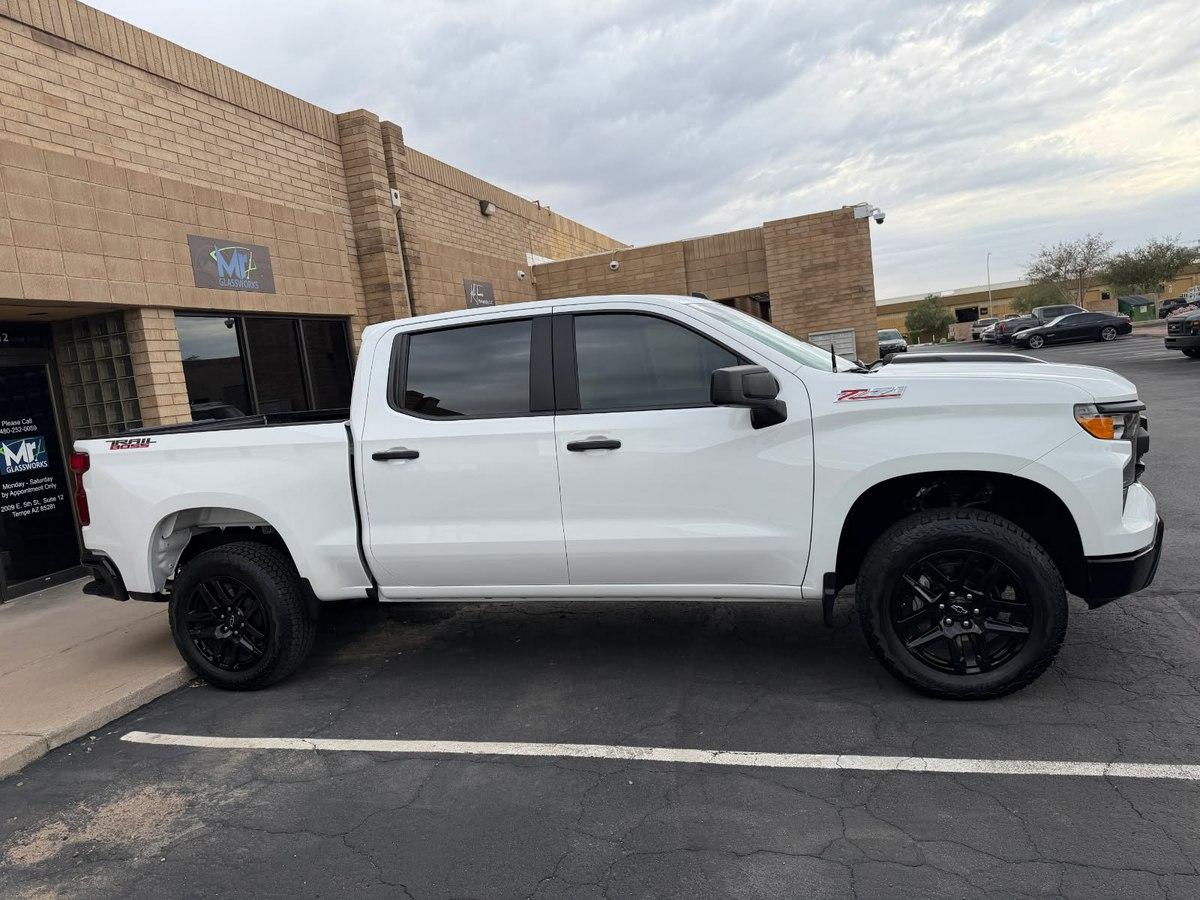
Most answers to this question hedge: "it depends." It does depend — but not so much that a shop can't give you its real numbers. Ours, from the jobs we actually run: window tint on a car with no old film to remove takes 2-3 hours. If there's old tint that has to come off first, the job runs about 4-6 hours. After that, the film needs three easy days of care before you treat it like normal glass.
We run window tinting out of our Tempe shop — ceramic film is what we use on all the cars we tint — so these are the numbers our customers actually plan their day around, not an internet average.
The short answer
| Fresh tint, no old film | 2-3 hours |
| Old tint removal + fresh tint | 4-6 hours |
| Aftercare (no wash, windows stay up) | 3 days |
That's for a typical car or truck. A two-door with simple glass sits at the fast end; a crew-cab truck with more windows and a rear slider sits toward the top of the range — the finished Silverado above is exactly that kind of job, straight from our Tempe location.
What actually sets the time
Number of windows. More glass is more time — every panel gets measured, cut, cleaned, and set on its own. A coupe and a four-door crew cab are simply different-sized jobs, which is why honest shops quote a range instead of one number.
Curves and dot matrix. The back glass is usually the slowest panel on the car: compound curves and the dotted border near the edges are where an installer slows down to keep the film laying flat and the edges clean. This is trade-wide practice, not unique to us.
The film itself. Window film comes in a spectrum — dyed, metalized, carbon, ceramic. The install technique is broadly similar across them; what changes is performance: ceramic film blocks heat and UV without a metal layer that can interfere with phones and GPS. Film makers like XPEL publish care and product guidance that's worth a read if you're comparing.
Old film. The single biggest adder — big enough for its own section.
The removal case: why old tint doubles the job
When a car comes in with tint already on it — bubbling, purple, peeling at the edges — the old film has to come completely off before anything new goes on. The photo below is a real one from our shop: prior tint that needed removal before the fresh install.
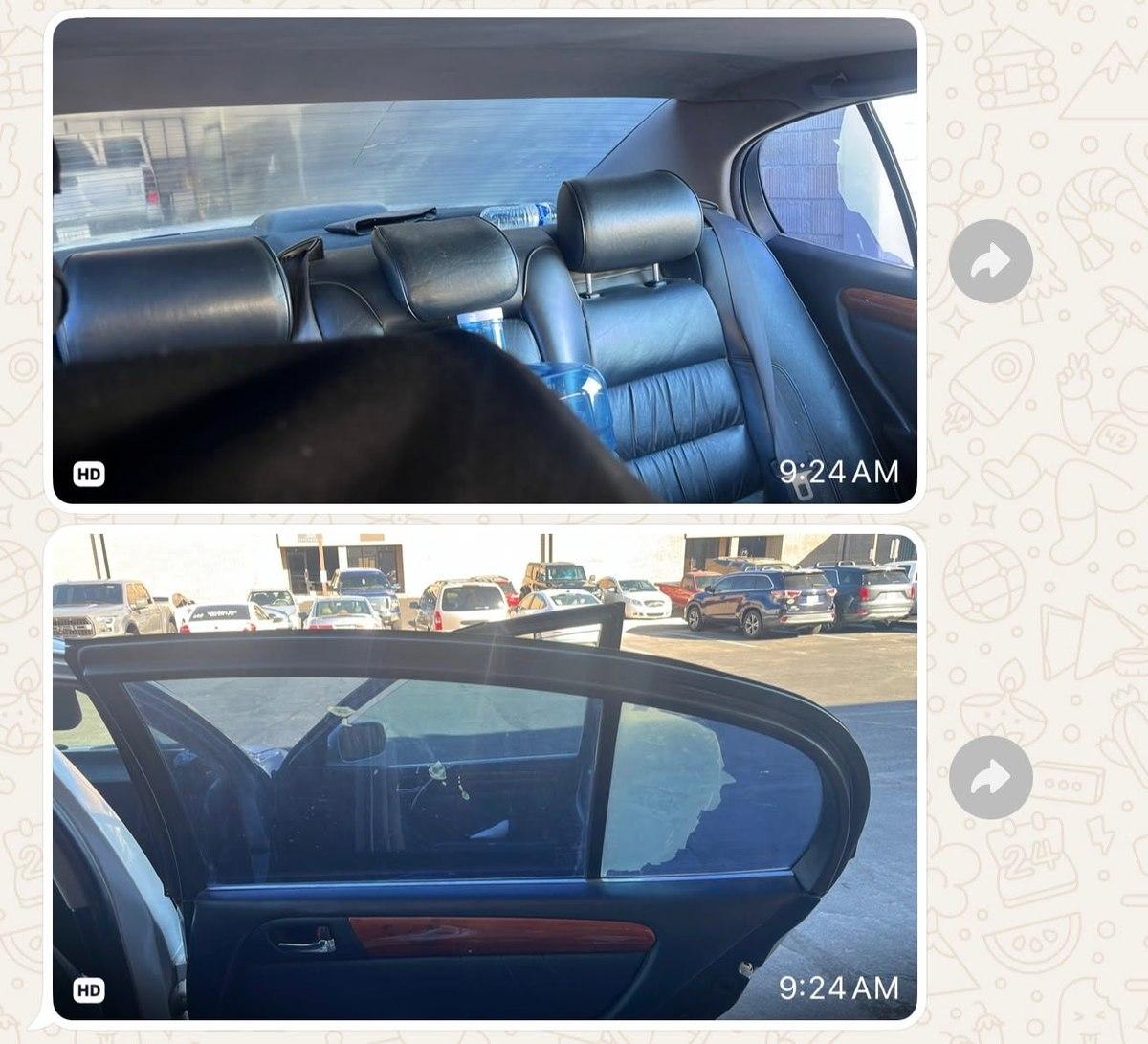
Prior tint that needed removal — the "before" half of a 4-6 hour job.
The film itself often peels in sheets. What's slow is everything under it: the adhesive left on the glass has to be warmed and worked off, and the glass has to be perfectly clean before new film touches it. Any glue residue left behind shows through the new tint forever — there are no shortcuts, which is why removal takes the job from about 2-3 hours to about 4-6.
If your current tint is failing, that's normal: film is a consumable, not a lifetime part. The question "how long does window tinting last" is really a question of film quality and Arizona sun exposure — quality film lasts for years, and a desert-parked car asks more of it than a garaged one.
Ceramic vs regular tint — and no, it's not the ceramic you're thinking of
People hear "ceramic" from us in two completely different conversations. Ceramic coating vs PPF is a paint question — shine-and-coating versus rock-chip film. Ceramic window tint is a glass question: a non-metallic film that cuts heat and UV, which matters in a Phoenix summer, and doesn't mess with phone signal the way old metalized films could.
It's what we use on every car we tint. Install time is essentially the same as regular film — you're choosing performance, not adding hours. If you're weighing shade percentages at the same time, our Arizona window tint laws guide covers what's street-legal here (ARS 28-953 sets the limits), and darker isn't automatically better — 20% at night is genuinely harder to see out of than 35%.
Aftercare: the first 3 days
The install takes hours; the cure takes days. New tint holds a little water between film and glass — it can look hazy or blotchy for the first few days. That's normal, and it clears as the film cures. The International Window Film Association and its consumer FAQ describe the same thing: film keeps curing after installation, and climate sets the pace — Arizona heat speeds it up.
While it cures, our instruction to every customer is simple: no car wash for 3 days, and don't roll down the windows for 3 days. Washes and window motors are exactly the two things that disturb film that hasn't finished bonding. Skip both for three days and you're set.
Two things people ask after that: the tint doesn't get darker as it cures — it looks darker as the haze clears and the true shade shows through. And those tiny water bubbles under new film? Leave them alone; they vanish on their own as it cures.
Is it a same-day job?
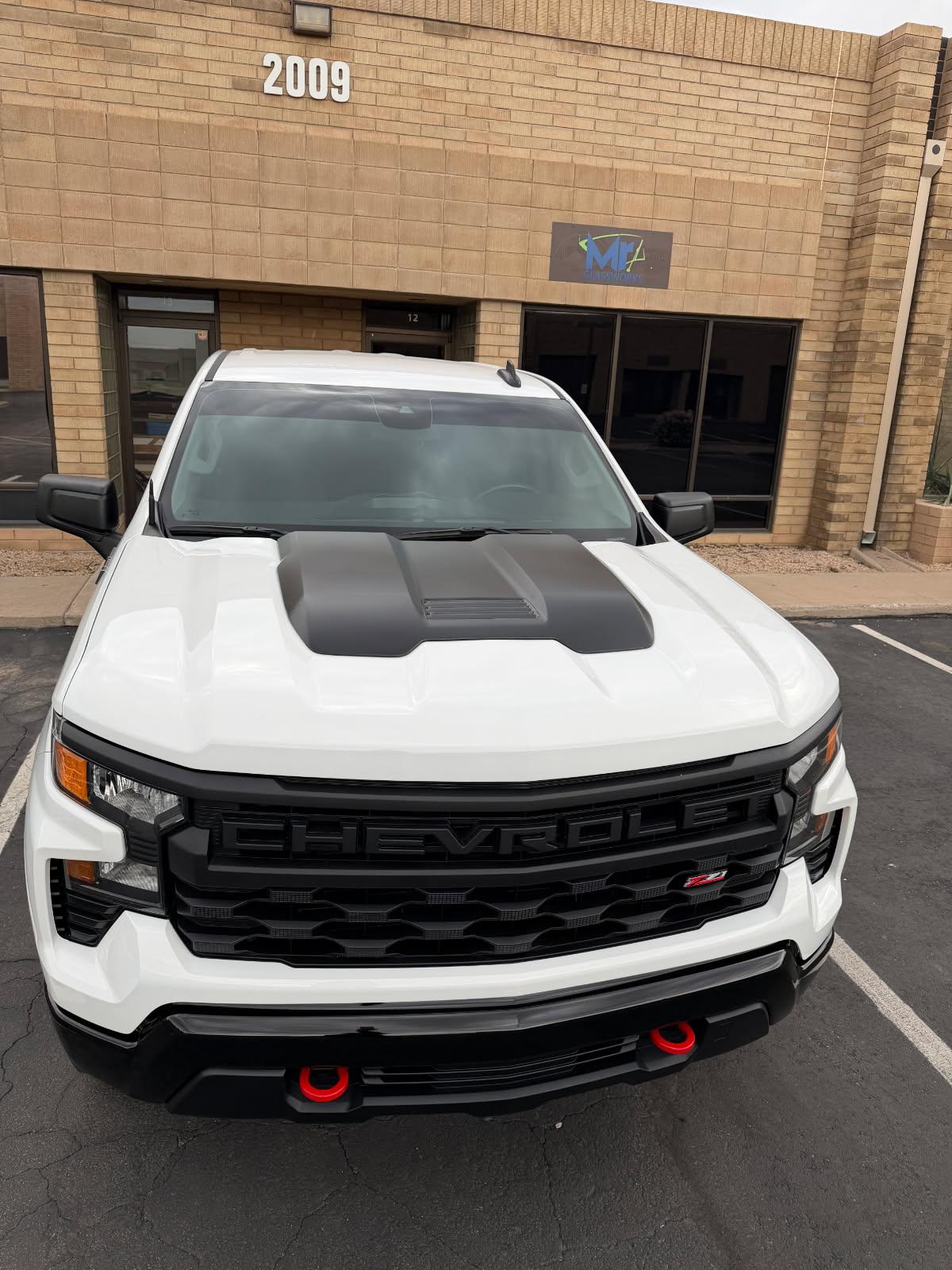
Same-day work: finished and parked at the Tempe shop.
Yes — that's the point of the numbers above. Fresh tint is a wait-in-the-shop job; removal-plus-tint is a drop-it-off-in-the-morning job. Either way you drive out the same day with the film on, and the only thing waiting is the 3-day cure. Bring the car to our Tempe shop — it's where we run tint — or call or text (480) 252-0059 and we'll tell you which side of the range your car falls on before you come in.
FAQ
How long does it take to tint your windows?
Plan on 2-3 hours for a car with no old film on the glass, and about 4-6 hours when old tint has to be stripped first. Same-day either way; big trucks with more glass sit toward the top of the range.
How long before you can roll your windows down after tinting?
Three days. Rolling the window down disturbs film that hasn't finished bonding to the glass — it's the one mistake that ruins an otherwise clean install.
Can I wash my car after getting tint?
Not for three days. Water, brushes, and pressure around the glass edges all work against the curing film. After three days, wash it normally.
Does window tint get darker as it cures?
The film's shade is fixed when it's made. It looks darker over the first few days because the curing haze clears — what you're seeing is the true shade finally showing through.
Why does new tint look hazy or blotchy?
There's a thin layer of install water between the film and the glass that takes days to escape, especially in cooler weather. Haze, streaks, and small water bubbles are normal early on and clear as the film cures.
How long does it take to remove old window tint?
Removing old film — plus the adhesive it leaves behind — typically doubles the job: what would be a 2-3 hour fresh tint becomes about 4-6 hours with removal first. The adhesive cleanup, not the peeling, is the slow part.
How long does window tinting last?
Quality film lasts for years; the honest variables are film grade and sun exposure. A car parked outside in Arizona sun works its film harder than a garaged car — expect the desert to ask for its share.
Is 20% tint hard to see out of at night?
It's noticeably harder than 35%, especially backing up at night in unlit lots. Plenty of people run 20% on rears happily; just know the trade before you pick your shade — and check what's legal on each window before you commit.